
Nothing is essential, real, or of any value unless ordained by God who arranges all things and makes them useful to the soul. Jean-Pierre de Caussade, Abandonment to Divine Providence . Jesus’ death on the… More

liberating christian thought
Nothing is essential, real, or of any value unless ordained by God who arranges all things and makes them useful to the soul. Jean-Pierre de Caussade, Abandonment to Divine Providence . Jesus’ death on the… More
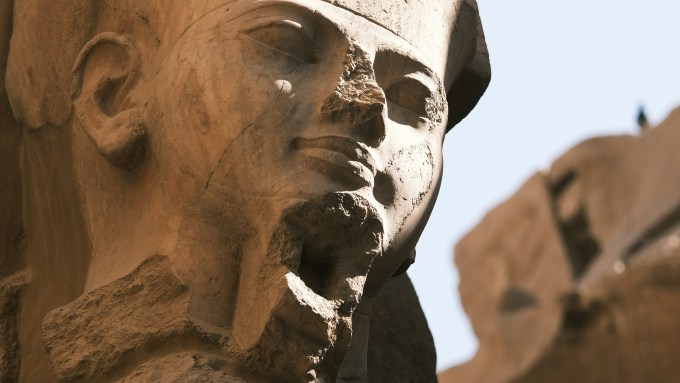
It does not, therefore, depend on human desire or effort, but on God’s mercy. For Scripture says to Pharaoh: “I raised you up for this very purpose, that I might display my power in you… More

But the angel reassured her, saying, “Do not yield to your fear, Mary, for the Lord has found delight in you and has chosen to surprise you with a wonderful gift. Luke 1:30 (TPT) Recently… More

If anything has led to the loss of religious faith in the modern world, it is the idea that “science” has proven that God does not exist. Much of the disdain in our society toward religious faith I spoke about in our last post can be traced back to this idea.
Which may not be obvious. But to the extent society believes that God is an irrational concept, those who believe in God will be seen not only as violators of human freedom but also violators of compassion and justice. Continue reading “The Christian Mind: Irrational”

Author and Fox News columnist Suzanne Venker is causing quite a stir these days. She has recently published The Alpha Female’s Guide to Men & Marriage, which argues that if women today wish to be happy in their marriage, they would be wise to consider some ideas from our not-so-distant past: traditional roles. Continue reading “The Day I Put My Wife in Her Place”

Be assured that anything you do that is beautiful and excellent will be repaid by our Lord
Ephesians 6:8 (TPT)
I remember a time not long ago when I was going through it. Despite my best efforts, everything seemed to be going wrong. And I did not see how any of it was going to work out for my benefit. It just seemed as though I had signed up to suffer in that season of my life without any return for my suffering or sacrifice. And then one night, on the way home from the office, the Holy Spirit met me in an unusual way and showed me, whatever benefits it may have here on earth, my present obedience had eternal value in heaven. That there was transcendent value in what I was going through. And with that revelation, my heart came to rest. I realized in that moment my struggle was not really about the suffering I was going through, but rather the fear my suffering had absolutely no meaning or value.
I am a firm believer faith produces results. But if we are not careful, we can assume the whole purpose of faith is to produce results. That the only reason we believe God is for God to do this or do that for us. That the only value faith has is the benefits it can produce in this life. The problem here is that it reduces our faith down to how it benefits us. And even though God wants to shower us with benefits, and those benefits come by faith and cannot come any other way, thinking this way eclipses something fundamentally beautiful and important about the Christian faith: what we do and how we live has transcendent value.
The Christian life is primarily, if not entirely, motivated by transcendent value. For example, we love because he first loved us, not in order to receive anything in return. It is selfless, but it is not pointless. The new believer radically saved by Jesus who is suddenly charitable and kind to his or her friends and neighbors is not doing so for personal gain: they are doing so because what matters to them now most goes beyond this world and anything it has to offer. They are operating from another kingdom that cannot be shaken, making decisions that have value according to that kingdom alone. They are reflecting heaven.
They know anything they do that is beautiful and excellent will be repaid by our Lord, and so can we.
Photo by Marie Bellando Mitjans on Unsplash

The steadfast love of the LORD never ceases;
Lamentations 3:22-23 (ESV)
his mercies never come to an end;
they are new every morning;
great is your faithfulness.
I mentioned recently that salvation is like a Christmas gift. By extension, life itself is a gift, because we cannot escape the grace God has extravagantly poured out upon us. Yes, our choices matter, and they determine our ability to experience the fullness of the life Jesus has for us. But for us, that begins with recognizing it is now Christmas morning, and there is a gift waiting for us under the tree. And God our Father is like a good parent beckoning us to come and open that gift.
We have spent a lot of time reflecting on suffering, and the reason for this is that it can prove to be a distraction, causing us to forget it is Christmas morning. When I first encountered real difficulty in life, I immediately went into problem-solving mode. I became convinced something was terribly wrong with me and that I needed to fix it. The message was, “If I do not do something about this, things will go horribly wrong, and I will deserve all of it.” I was doing what I had done all my life: If there is something wrong with me, I need to do everything in my power to correct the situation quickly so that I can be okay; so long as I was in the wrong, I was not okay; I had no right to enjoy life. But the thing I was trying to fix was beyond my pay grade; I was actually unable to fix me. The result was me being permanently stuck in problem-solving mode. Life itself became a problem to be solved instead of a gift to be enjoyed.
This is how suffering can prove to be a distraction, and I imagine it can take many forms in our lives. But the way we truly “fix” our problems is by recognizing Jesus is the solution to every problem we face. He is the ultimate Christmas gift. Whatever our problem, we can come to him. If we think we must be perfect, he causes us to rest in our imperfections by showing us in him we already are. If we think we must control others or our circumstances to be happy, he shows us happiness is not found in this world but in the kingdom that cannot be shaken. If we think we are all alone in our struggles, he shows us he is with us, and has been with us all along, an ever present help in our times of need. And so on. These gestures are not God’s refusing to fix the problems we face; it is his way of bringing us out of the shadows of our own lives and the false beliefs that dominate them into the light to the real solution.
God our Father is beckoning us to the gift he has for us under the tree, and to remind us that, now Jesus has come, every day is Christmas morning.
Photo by Element5 Digital on Unsplash

Dear friends, do not be surprised at the fiery ordeal that has come on you to test you, as though something strange were happening to you.
1 Peter 4:12 (NIV)
In the 1997 move The Edge about a millionaire and his entourage who themselves lost in the Alaskan wilderness, the main character played by Anthony Hopkins turns to his associate and explains most people who get lost in the wilderness die of shame. At the surprise reaction from his associate he explains they ask “What did I do wrong? How could I have gotten myself into this?” And so they fail to do the one thing that would save them.
Trials and hardship can be that way for us. There is a basic instinct buried in the human soul that if things are going poorly, it must be our fault. We have done something to deserve this.
But it is not that way for us. There may be many reasons we find ourselves in the wilderness of suffering, but us deserving to be punished is not one of them. We have been transferred from the kingdom of darkness to the kingdom of light, and the new kingdom we now live in is devoid of condemnation and judgment. Rather it is full of redemption. Jesus is actively causing all things to work for our good, including whatever wilderness of suffering we may find ourselves in. What matters is not what we have done to get ourselves into it, but rather what God is doing to get us out of it. He has a plan. He always has a plan.
If you find yourself lost in the wilderness of trials and hardship, do not be surprised and ask what you have done to deserve it. Feel free to fix your eyes on what Jesus has done to get you out of it. The one who is with you is the very same one who did not spare his own Son for you. Will he not now give you all things?
Photo by Jeff Golenski on Unsplash

Do not be anxious about anything, but in every situation, by prayer and petition, with thanksgiving, present your requests to God. And the peace of God, which transcends all understanding, will guard your hearts and your minds in Christ Jesus.
Philippians 4:6-7 (NIV)
We are a very pragmatic and result-oriented generation. Nearly everywhere we turn, we are being told what to do in order to achieve the desired results in life: eat this food and you will lose weight; do this exercise and you will have amazing abs. Adopt this discipline and you will succeed. Practice this meditation technique and you will have peace. Everything we do is to an end. It is easy for us, therefore, to approach the Christian life that way.
But I do not think God is into us doing things to achieve results. He is rather the answer to all the results we seek, and therefore the end to all our efforts to achieve them.
I have spent the past couple of weeks going through the book of Romans with my wife, and the thing that strikes me is how little our personal effort plays in salvation. That it is truly by faith alone, and faith – as defined by the book of Romans – is our recognition the gift of salvation is not by works. We do not achieve salvation by human effort; it is a gift freely given.
And salvation is not just a future eternal state. It includes all that God desires to do in our lives. It is the abundant life Jesus promises, the victorious life over sin and death God always intended for us. It is the successful life. The successful life, then, is not achieved by human effort. We do not do in order to achieve the results we desire. We rest and believe.
This does not me we sit idle, of course. But it does mean our activity in life is confined to doing only what the Spirit of God in us is doing. The word picture here is like a home improvement expert coming into your home to remodel after several failed attempts by you to remodel it yourself. At that point, you no longer are trying to remodel your home. You are learning to get out of the way and let the expert do his best work, assisting when called upon. This is the Christian life. We are not trying to rebuild our own life. We are learning to allow God to rebuild it for us.
And this is why we really can be thankful in all circumstances. We are not trying to be thankful in order to make things happen. We are thankful because God has sent the best Home Improvement Expert in all creation into our lives, and He is already at work. He may be kept from doing all he wishes from time to time If we are getting in his way or preventing him from remodeling some of the rooms, but even here he is at work, teaching us to yield to him, teaching us how to make more space that he might be the one to do it.
Thankfulness stems not from a frantic impulse to make things happen; it stems from the recognition he has come and he has things under control. This is why we can be thankful. And the remodeling work he is doing is beautiful. In every moment, whether there is a lost of dust on the floor or not, he is doing a beautiful work.
Photo by ASR Design Studio on Unsplash

In repentance and rest you will be saved,
Isaiah 30:15-16 (NASB)
In quietness and trust is your strength.
But you were not willing,
And you said, “No, for we will flee on horses!”
Therefore you shall flee!
Speaking of death being the path to greatness, God will often lead us into situations where the only fruitful way forward is to die to our familiar ways of keeping ourselves safe and to trust in him instead. God will do this on purpose. One day, we will be happily following God’s leading; the next, we fill find ourselves in the midst of danger and difficulty, wondering whether we have really heard God. But (if the Bible is our guide) the presence of danger and difficulty in our lives is not an indication we are not in God’s perfect will (especially if we have “obeyed” our way into it). It is often an indication God is setting us up for the thing he likes to do most: delivering us from our troubles.
No doubt, such a place is a bit uncomfortable. The apostle Paul recounts on one ministry trip being “burdened excessively, beyond our strength, so that we despaired even of life.” But he explains God ordained this so that “we would not trust in ourselves, but in God who raises the dead,” and declares God is “he on whom we have set our hope.1 This is really the heart of the Christian life: the process of us learning to no longer trust in ourselves but setting our hope entirely on God instead.
This is where the Christian life demands courage. Speaking from personal experience, it is much easier for us to flee from uncomfortable circumstances and trust in our own “horses,” just as the children of Israel did. Horses represent our own strength. The interesting thing is that the children of Israel were fleeing on their horses, not entering into battle with them. This is such a good picture of our human condition: as we trust in our own strength, we often find ourselves fleeing from life, not engaging with it. We find ourselves creating systems of survival around our fears or pain instead of facing these things head on that we may live a full life. This is because we were not created to live life on our own. We were created to live life in partnership with Him.
For this reason, it is so important to have a big opinion about God. Believing God is a God who desires to heal and deliver and extravagantly bless you has little to do with being selfish. It has everything to do with the confidence to remain in a place of rest in the middle of danger and difficulty so that you do not take matters into your own hands, giving God the opportunity to do his best work.
Photo by Viktor Talashuk on Unsplash
 D. Patrick Collins