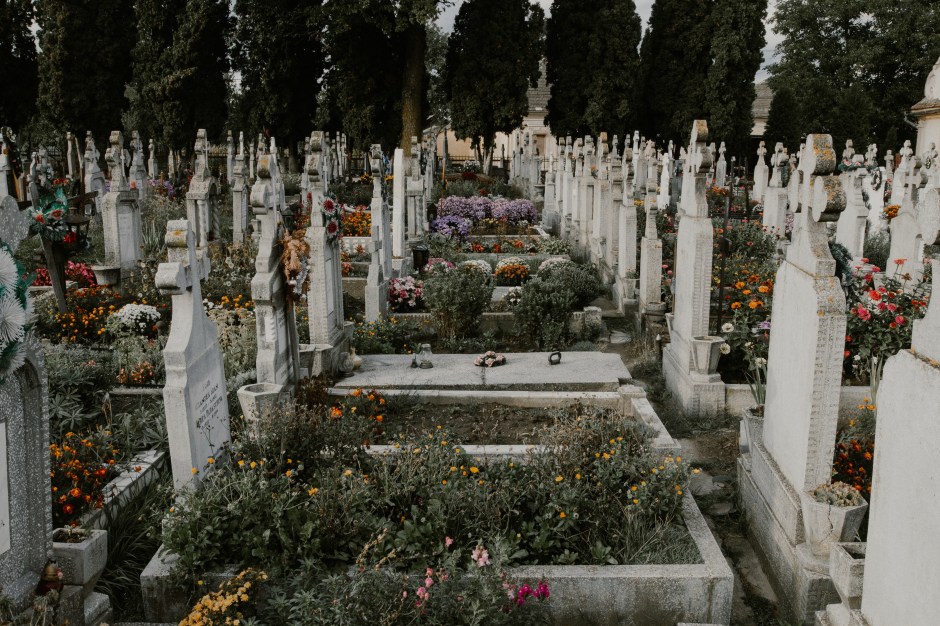
The Shock of Answered Prayer

Then Elisha said, “Hear the word of the LORD. Thus says the LORD: Tomorrow about this time a seah of fine flour shall be sold for a shekel, and two seahs of barley for a shekel, at the gate of Samaria.’ ”

2 Kings 7:1 (NKJV)

I have recently experienced an answer to prayer so spectacular in its precision and breadth it has left me a bit shocked. And by shocked I mean not quite able to take it the fullness of what has just happened. It reminds me of a moment about fifteen years ago when, after seven years of intractable financial difficulties and with no financial prospects, my situation suddenly and miraculously changed, and remained changed despite all odds, even through the worst economic recession in recent history.

Or the time my late wife and I somehow managed to purchase a condo in the impossible housing market in San Clemente with horrible credit and at a time investors were crowding out all homeowners with cash offers thousands of dollars above asking price.

Or the time I called out to God to show me his supernatural power based on hunger alone, having no experience with his supernatural power and not even knowing if that were possible, and I suddenly found myself in the midst of one of the more significant revivals in modern history, overcome by the miraculous power of God.

The opening passage of scripture above represents such a moment. Samaria had been under siege and in the midst of a famine, presumably for a long time. Because when the prophet Elisha prophesied its end, one of the king’s officers could not believe it. It was way beyond possible in his mind. Siege and famine were the permanent reality and could not be changed, not even by God.

But God is able to do what no man or woman can do. He is not limited by space or time because he is the author of both. He is capable of sovereignly orchestrating an answer to your prayer well in advance of you asking, for he knows the end from the beginning, even he who is writing it. And his dramatic answers to prayer are a reminder to us all. Whatever hopeless situation you think is permanent and unchangeable in your life is an illusion. It is an opportunity for God to show up in a dramatic way, if we but dare to step into it with childlike faith.

I will be honest with you: such a decision on our part requires great courage, especially if you have ever experienced disappointment in the past. But when we choose hope, we are aligning ourselves with the true nature of things, for God is the God of hope, with whom all things are possible. This is true whether God’s answer to your prayer is sudden or delayed. And our patient expectation of the good in a world otherwise devoid of hope is who we really are.

Besides, we will be filled with hope and faith in God’s ability to do impossible things for all eternity. Why not start now?

Photo by Nathan Bingle on Unsplash

Does God Only Heal Sovereignly?

News about him spread all over Syria, and people brought to him all who were ill with various diseases, those suffering severe pain, the demon-possessed, those having seizures, and the paralyzed; and he healed them.

Matthew 4:24 (NIV)

Is God’s decision to heal based entirely on his sovereignty? And what do we mean when we say this, as some people do?

I believe what we mean is that there is no rhyme or reason to whom God chooses to heal. That God is up in heaven arbitrarily deciding to miraculously intervene in some people’s lives and not others. The reason we feel this way is because it confirms our experience. When we see or hear about someone miraculously healed and know of another not healed, it can appear to us this is exactly what God is doing: just being arbitrary.

And such an idea is comforting. A God who confirms our experience, as opposed to one who challenges our experience, means there is nothing we need to change. But if God is different from our experience – say for example, if God’s desire is always to heal all who are “suffering severe pain, the demon-possessed, those having seizures, and the paralyzed” – then we must ask the hard questions.

But aren’t we here to ask the hard questions? Do we really think life is about asking easy questions, or that God is so like us that hard questions are not necessary? In my opinion, it is better for us to accept and embrace a God whose will is always to heal us and wrestle with that disparity than to embrace a God before whom our suffering is nothing more than a lottery ticket. Especially if this means building for ourselves an image of God who literally wants us to remain not healed – whose highest virtue and calling for us is to suffer. As if God is glorified when we are miserable.

The theological problem I have with the idea God sovereignly heals is that when we say God sovereignly chooses not to heal a person, we are saying nothing at all. The reason is that God’s sovereign will, as opposed to his perfect or desired will, is what ultimately happens in any given situation, whether it is what God wanted to have happen or not. God’s perfect will was for Adam and Eve not to eat of the fruit of the tree of the knowledge of good and evil; God’s sovereign will is what happened when they did. God’s perfect will is that none should perish; God sovereign will is what happens when some do. God’s perfect will is that all would be healed; God’s sovereign will is what happens when some are not. God’s sovereign will is what God as the novelist of all human history allows to take place, whether it is what he wants to take place or not.

So when we say God sovereignly chose this or that to happen, we are saying nothing more than it happened and acknowledging this means God allowed it. We are saying nothing about whether it is really what God wanted to have happen. It would be simpler for us to say “I do not know why it happened,” or say nothing at all.

I am trying to save us from a world in which some things are not possible for the sake of our personal comfort. Trust me: you are going to be uncomfortable no matter what. It is much better for us to be uncomfortable for the right reasons, namely, by realizing we live in a world in which all things are possible, and we cannot rest till we align ourselves with that reality. It may cost us our personal comfort, but a world in which all things are possible means a world in which the most beautiful things are possible. And is that not worth asking the hard questions?

Photo by Mohamed Nohassi on Unsplash

Thinking about Heaven

In love he predestined us for adoption to sonship through Jesus Christ, in accordance with his pleasure and will — to the praise of his glorious grace, which he has freely given us in the One he loves.

Ephesians 1:4-6 (NIV)

It is amazing to think what Jesus has accomplished for us at the Cross: unhindered access to heaven for all eternity. As the above scripture makes clear, he has done so because of his love for us alone. When the Bible says, “In love . . . in accordance with his pleasure and will,” it means he did it for no other reason than he loves us and it made him happy to do it. Jesus went to the Cross and died in our place that we might be with him for all eternity, because it made him happy.

This is what Scripture means when it says, “For the joy set before him, he endured the Cross.”1 The joy was us. It wasn’t the fact he was going back to be with The Father, for this he already had. It wasn’t that the nightmare he was about to endure would be over, for he willingly chose to endure the nightmare. It was because the thing he and The Father desired to achieve would finally be achieved: our salvation. Unhindered access to his goodness. Being with him for all eternity.

Think for a moment what it will be like when you step into eternity. The Word of God says no eye has seen nor has ear heard all that God has prepared for those who love him.2 The apostle Paul describes being caught up to heaven and hearing inexpressible things.3 Revelation speaks of streets of gold so pure it looks transparent, of city walls adorned with precious jewels, and a river as clear as crystal flowing from the throne of heaven bearing fruit and giving healing and life to the nations.4 There will be no more tears or sorrow or sickness and disease, no more poverty or brokenness and sin. And all of this will be ours to experience based on Jesus alone and what he has accomplished for us, for no other reason that he loves us and it was his pleasure to do so.

So I must ask: if this is so, what keeps us from experiencing all of these things now? If the eternal life that awaits us is not dependent on our own merit but his merit alone, and he has done all that is necessary for us to experience these things based on his love and good pleasure alone, what prevents us from stepping into these things now?

I would suggest nothing. I challenge you this day to dare to believe there is no telling what Jesus might do for you in the next moment. After all, he loves you that much.

Photo by Danilo Batista on Unsplash

  1. Hebrews 12:2 ↩︎
  2. 1 Corinthians 2:9 ↩︎
  3. 2 Corinthians 12:4 ↩︎
  4. Revelations 21 and 22 ↩︎

Waking from the Dead

But because of his great love for us, God, who is rich in mercy, made us alive with Christ even when we were dead in transgressions — it is by grace you have been saved.

Ephesians 2:4-5 (NIV)

As a young Christian, I walked through a season of realizing just how sinful I was. It was as if all my motives were exposed to the light of truth, and none of them were any good! I realized at that time that even my desire to be good was driven by an unhealthy need to be accepted by others. Which was a problem, of course, since being a Christian meant being willing to be despised and rejected by others for the sake of Jesus.

And so I did what anyone does who thinks he is a pretty good person and suddenly discoveries he is not: I hid. I hid by doing everything in my power to be a good Christian. I was constantly obsessed with the idea God requires radical obedience and tried to obey God in radical ways. Whether it was giving or sharing my faith or reading my Bible or attending church functions, I did so with my whole heart, ideally in a way that cost me something.

But my obedience was not really to God. it was my attempt to change who I was so that I might be pleasing to him. The knowledge of my sin was like a secret I carried; it weighed on my soul like a dark cloud. I felt dead inside.

The beautiful thing about the Cross is that Jesus died for the very thing I was hiding from. It is easy to think Jesus died for my sins or even think He died for my past sins only (and now it is my job not to sin any more presumably). But our problem runs much deeper than that. We are dead in our sin, by nature deserving of God’s wrath. The horror I felt about myself was real. But the remedy was not me trying harder. It was coming out into the light to allow Jesus to do what only He could do: make me into the very thing He desired me to become. And furthermore, recognize He alone has the power to do that. In short, Jesus died that He might raise me from the dead.

Once we are raised from the dead, we are new creations. And our new nature is unpunishable. Jesus has literally put to death the part of us that can be punished and given us a new nature than cannot be punished. This is how far He has separated us from our sin. Our new nature also has the power to do what pleases Jesus, and it is from this nature that we now operate.

But our new nature can only come fully online by us receiving the Good News. In my case, it was by actually realizing whatever I felt I deserved or did not deserve on the basis of my own conduct or even the content of my own heart no longer mattered. All that mattered was recognizing I had been raised to life — a life for whom guilt and punishment was literally impossible. In short, that I had been awakened from the dead.

And when you realize you have been awakened from the dead, all around you is life. And there is simply nothing the God of life will withhold from you.

God the Novelist

You intended to harm me, but God intended it for good to accomplish what is now being done, the saving of many lives.

Genesis 50:20 (NIV)

The topic of God’s sovereignty – the idea God is orchestrating all events in life and in the world – can be difficult for us. We do not want to think God is orchestrating all things because we reason that means God is responsible for all things. If He is orchestrating all things, then He must be giving people brain cancer, wiping out people with natural disasters, and committing every atrocity on the planet from the time of Adam and Eve till now. So we reason.

And so we make God less sovereign. We say that He is not really in control of all things as much as He is in charge of all things. Or that He was not responsible for the hand we were dealt but that He can win with any hand. Or that he is not responsible for our sickness or season but that He is responsible for delivering us from it. All of these things are an attempt to make God better. But the problem is: they only end up making God smaller.

And the difficulty with this is: We need a God who is not small. In fact, we need a God who is very big, so big that He is fully in control of every detail of our lives and actively causing all things to work together for our good. Without this, we are in a world outside God’s control. And if it is outside God’s control, we must remain in control, forever fearful of what may happen to us.

But what are we to do with a God who is sovereignly in control of a world with so much suffering, tragedy, and evil? Can we responsibly say He is the cause behind these things? It depends on what we mean by “cause.” If we mean God caused them in the sense He is the ultimate cause behind all things, the answer is yes. But if we mean God caused them in the sense He is morally responsible for them – that is, He is the one to blame for them, the answer is no.

An analogy may help here. An author who writes a novel is the ultimate cause behind everything that happens in the world he or she has created in the novel. This includes the actions of the villain in the novel. But it is difficult if not absurd to say the author is morally responsible – again, the one to blame – for the evil perpetrated by the villain. A novelist cannot be tried and convicted for the crimes committed by his or her characters, even though the novelist is the ultimate cause of them.

The important thing to realize here is that when we talk about God being sovereign, this is exactly what we are saying. In this world, the “characters” alone are morally responsible for their actions1, not God. And yet God, in a way we cannot fully understand, is ultimately the cause of them, just like a novelist is. If an evil ruler like Pharaoh comes to power and oppresses the children of Israel, that ruler alone is to blame for his actions. And yet it is God the Novelist who has raised him up for this very purpose.2 Joseph’s brothers intended harm for him by leaving him to die, but God the Novelist intended all along this would lead to the saving of many.

Now it is true God is ultimately responsible for allowing all that takes place in the panoramic novel that is all of human history, whether good or evil. It is also true He is ultimately responsible for allowing the effects of evil, which is all the suffering we see in the world today. But it is important for us to keep in mind this is true whether God was sovereign or not. An all-powerful God who can prevent evil is no less responsible than an all-powerful God who is the ultimate (novelist) cause behind evil. So when we reject the idea God is sovereign, we are really rejecting the idea He is all-powerful. We are trying to make Him powerless over the evil and suffering in the world in order to get Him off the hook for having anything to do with it. But a powerless God is the last thing you and I need.

It is far better for us, in my opinion, to trust God’s Word and accept the mystery of His sovereignty, knowing He is both absolutely good and powerful and has good reasons for sovereignly allowing what He allows in the world and in our lives. But it is vital to realize God Himself became the answer to all evil and suffering: becoming flesh and taking upon Himself the punishment we deserved through His Son, Jesus Christ. The real mystery is not that a holy God would allow suffering, but rather that despite our sins, He would choose mercy. To become sin for us that we might become the very righteousness of God.3

  1. We will have more to say about God’s interaction with us in future articles. ↩︎
  2. Romans 9:17 ↩︎
  3. 2 Corinthians 5:21 ↩︎