Permission to Play

I am writing a novel. Speaking of which: It has taken me about four decades to give myself permission to be a novelist.

The problem was me. No one forbade me to be a novelist. I did not grow up in a home where being a novelist (or any form of art) was frowned upon. On the contrary, my parents were of the disposition they just wanted us to pursue a life that made us happy (okay, after getting a college degree). But somewhere along the line, I became convinced the life of a novelist is a life I could not take too seriously because it was too enjoyable.

In her iconic work The Artist’s Way, author Julia Cameron remarks, “In order to move from the realm of shadows to the light of creativity, [artists] must learn to take themselves seriously. With gentle, deliberate effort, they must nurture their artist child. Creativity is play, but for the [artist], learning to allow themselves to play is hard work” (emphasis added).

Being an artist is hard work. But the hardest part of the job can be giving yourself permission to be one, and that means ––by any definition I have ever read in a book or article on creativity –– allowing yourself to play.

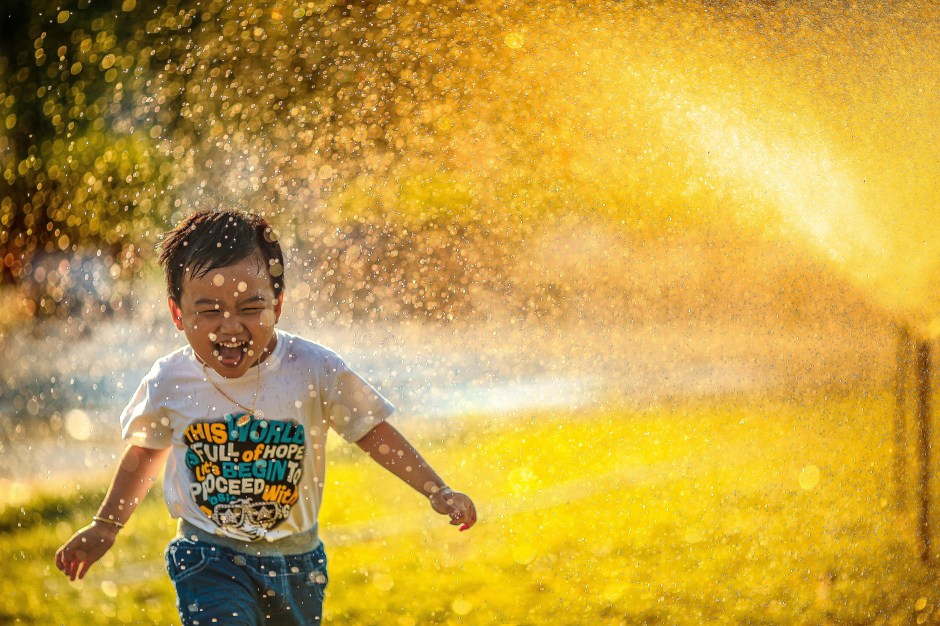
The difficulty for many of us is that we do not believe we deserve to play. I am not talking about goofing off and abandoning all responsibilities. I am talking about the play that lies at the heart of any artistic endeavor. And also every great work. Michelangelo was about serious work in the Sistine Chapel. But Michelangelo was also playing. While others were about serious business at the time of the Renaissance, Michelangelo was messing around bringing forth King David from a block of marble. You get the idea.

We are all artists. Each of us is uniquely created by God and called to leave our unique imprint upon the world. Each of us possess that one thing that God in his wisdom and foresight has imparted to us the wisdom, power, and grace for us to do, so much so –– dare I say –– that it feels like play. Yes, life is serious business. And we all have important things to do. But do not be surprised to find, as life finally draws to a close and we take that glorious step into eternity, that play was the most important thing we could have done this side of heaven. After all, we are commanded to become like children.

Feel free to share your thoughts in the comments section below!
Artistic Expression

Last night I attended a conference for Christian artists: Painters, dancers, writers, even basket weavers (I kid you not — and world renowned). Earlier in the day, Jesus said something to me that was one of those things that sounded ordinary but was quite extraordinary. He said, “Your words are a prophetic act.” In the Revival (Charismatic) culture, everything these days is a “prophetic act.” You here the term so often it has lost all or most of its meaning.

But God was telling me something important about my gift (and I will add here, yours as well). He was saying that the very words I write bring the presence of God — bring, as we like to say in revival circles, Heaven to Earth. This was important to me not because God was validating my gift but because He was telling me that what I write has inherent value regardless of what purpose or value I subscribe to it. Art, in other words, does not need to have a purpose; the fact that it exists is purpose enough.

For years I have struggled with how this gift works. Many of you may not know I am a writer of fiction and that it in fact is my primary gift. And the one thing that has always been self-evident to me is that in any form of artistic expression, freedom is paramount. But it is real difficult expressing any artistic gift you possess with freedom when you are trying to make sure it has a “purpose.” How is this going to reach the lost? How will this advance the Kingdom?

The answer is rather simple yet profound: Our very act of artistic expression, conceived in freedom, is itself an advancement of the Kingdom. The creativity that God has placed within us, and wishes to release through us, is not neutral. God told me during worship last night, “Do not underestimate the power of art. Do not underestimate the power of your words.”

We may agree, but this is a bit of a paradigm shift for many in the church who feel everything should have an overt purpose. To say artistic expression matters and should have a place is to say something deeply theological: That we weren’t put on this planet to simply save the lost or “advance the Kingdom” through preaching and the latest local church initiative to make Christianity seem really appealing to others. (Or worse, to try to get our art to explicitly do the same, all of which is a hopeless form of manipulation). Rather, our very lives are a work of art, not an effort to advance the Kingdom but the very expression of the Kingdom.

All of this took a great burden off my shoulders, for I realized I had been trying so hard to make this life work, it was destroying any semblance of art within me. It caused me to write the following words, which I hope bless you:

My life is not an act of futility or frustration; my life is an act of worship.


Photo by Alex Holyoake on Unsplash


The Christian Soul: Mindfulness

This is our final essay in the series The Christian Soul. Look forward to our new series on The Christian Mind, coming soon 🙂


mindfulness:  noun. The practice of maintaining a nonjudgmental state of heightened or complete awareness of one’s thoughts, emotions, or experiences on a moment-to-moment basis; also such a state of awareness. Continue reading “The Christian Soul: Mindfulness”